Kitchen drains
Kitchen sink clogs
A kitchen drain usually blocks a little at a time. Warm fat from pans cools inside the pipe, food particles stick to it, and one evening the sink holds water and won't let it go.
While the sink is full
Do this
- Turn off the dishwasher and don't start it again; it empties into the same drain.
- Bail standing water into a bucket so you can see the drain opening.
- On a double sink, plug one side with a wet cloth before plunging the other, or the plunger just pushes water across.
- If there's a disposal, switch it off at the wall before reaching anywhere near it.
Avoid this
- Pouring boiling water into a plastic trap that is already full; it can soften joints.
- Adding a chemical opener on top of standing water. If it doesn't work, whoever opens the trap gets splashed.
- Running the disposal to 'push it through'. It grinds; it doesn't flush the pipe beyond.
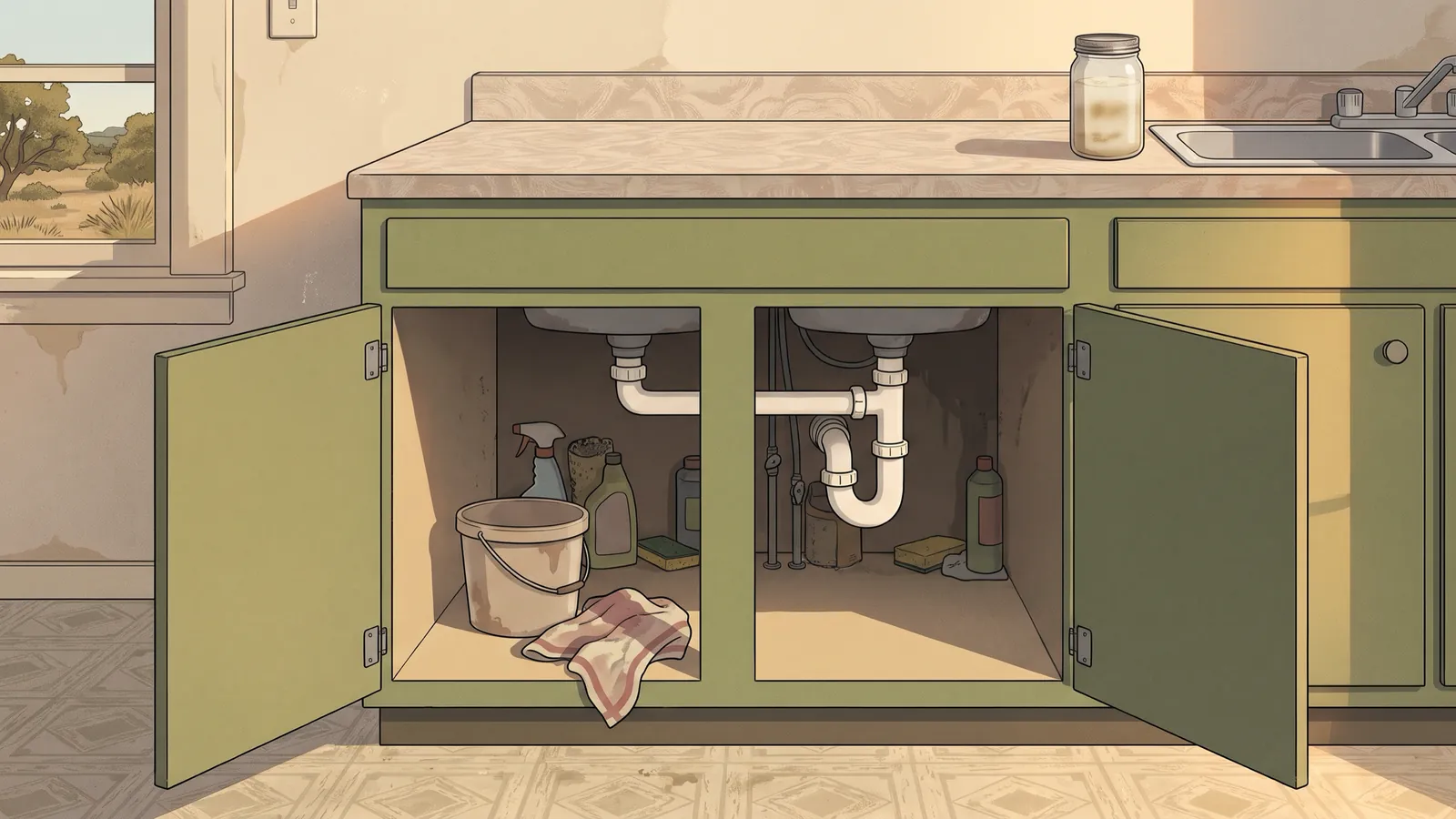
Where the blockage normally is
The trap under the sink catches big pieces, so it is the first place to look and the easiest to open. Grease clogs, though, often sit further on: in the trap arm or the horizontal pipe inside the wall, where the water slows down and cools. If you clear the trap and the sink is still slow, the problem is past it.
A kitchen that drains fine until the dishwasher runs points the same way. The extra volume shows that the pipe has narrowed, not closed.
How a company usually clears it
- 1
Open the trap or the wall connection
The trap comes off with hands or a wrench; a bucket catches what's in it.
- 2
Run a cable into the branch line
A small drum auger cuts through the grease plug and lets water move again.
- 3
Flush and test
Hot water runs for a few minutes while they watch the trap joints for drips.
- 4
Jet it if it keeps coming back
Repeated kitchen clogs usually mean grease coats the pipe wall. Hydro jetting scours it off where a cable only punches a hole.
Worth asking on the phone
- Whether they clear it from under the sink or from a cleanout outside, and what that means for the cabinet.
- How the visit is charged if the clog turns out to be in the main line rather than the kitchen branch.
- Whether they recommend a camera look if this is the second or third time.
What goes down a kitchen drain matters more than anything else here; the grease and disposal page covers it, including where Killeen takes used cooking oil.